
Consent and boundaries are deeply interconnected, both playing crucial roles in healthy relationships and interactions. Boundaries define what someone is comfortable with and what they are not, while consent is the active agreement to engage in a specific activity within those boundaries. Essentially, boundaries create the framework, and consent provides the permission to operate within it.
Find out more: Understanding Boundaries and Consent in Relationships

What is consent?
Consent is a mutual or equal agreement between two or more people – it is an enthusiastic “yes” and is given freely and willingly to each action. Consent is not a one off – it is ongoing and can be withdrawn at any time. It doesn’t matter how long you have known someone, there always has to be consent.
When is consent needed
Consent is needed anytime two or more people enter into a decision together – this does not just include sexual acts but for all types of interactions. Consent is needed for all physical touch.
Why do we need consent?
So that everyone feels safe and comfortable all the time.
Let’s normalise asking for consent for the smaller things so when it comes to asking for sexual consent it is natural. It sounds like “Can I give you a hug? ” “Can I borrow your phone? “I want to capture this moment who would like to be in this photo?” “Is it ok to share your number with my friend?”
Legally someone can not consent when:
In New Zealand, no one under the age of 16 can legally give consent to sexual activity. Even if they appear to agree, the law recognises they are not able to make that decision. Responsibility always sits with the older person — it is never on the young person.
Levels of intoxication:
If someone is at stage 3 or 4, they are unable to give consent. Even if they say yes with their words or their body language, they are not in a state of mind to be able to give consent and understand the decision they are making. If something happens to someone whilst they are under the influence, it is NOT their fault.
If somoene is asleep or unconscious, they are not able to give an enthusiastic yes with words or body language. Consent can not be given.
If someone is unable to understand what it is they are consenting to or unable to physically give consent, then consent can not be given.
Threats or coercion can be verbal or physical. It may sounds like “Come on, everyone else is doing it” or “If you loved me then you would”. It might also look like someone physically making another person do something they do not want to do. If someone is not freely and willingly saying yes, it is not consent.
If someone consents to having sex with another person and that person has lied about who they are (might have lied about their status, age, name etc.) then that is not consent.
Example of nature: If consent is given for one type of sex (for example, vaginal), but a partner changes to another type of(for example, anal) without checking in, the nature of what was consented to has changed – and consent no longer applies.
Example of quality: Someone consents to sex with a condom and the condom is removed without their knowledge, consent no longer stands as the quality of the act they consented to has changed.
There are 5 types of sex under NZ law: anal, vaginal, object, digital (fingers & toes), and oral.
Each one of these requires consent and holds the same maximum penalty of 20 years imprisonment if there is no consent.
Find out more:
Cup of tea consent Tea Consent (Clean)
Consent is like a Bike Ride Consent is Like a Bike Ride
When making a decision that involves another person it is important that we think about everyone involved starting with ourselves, use the tool below to guide your conversation.
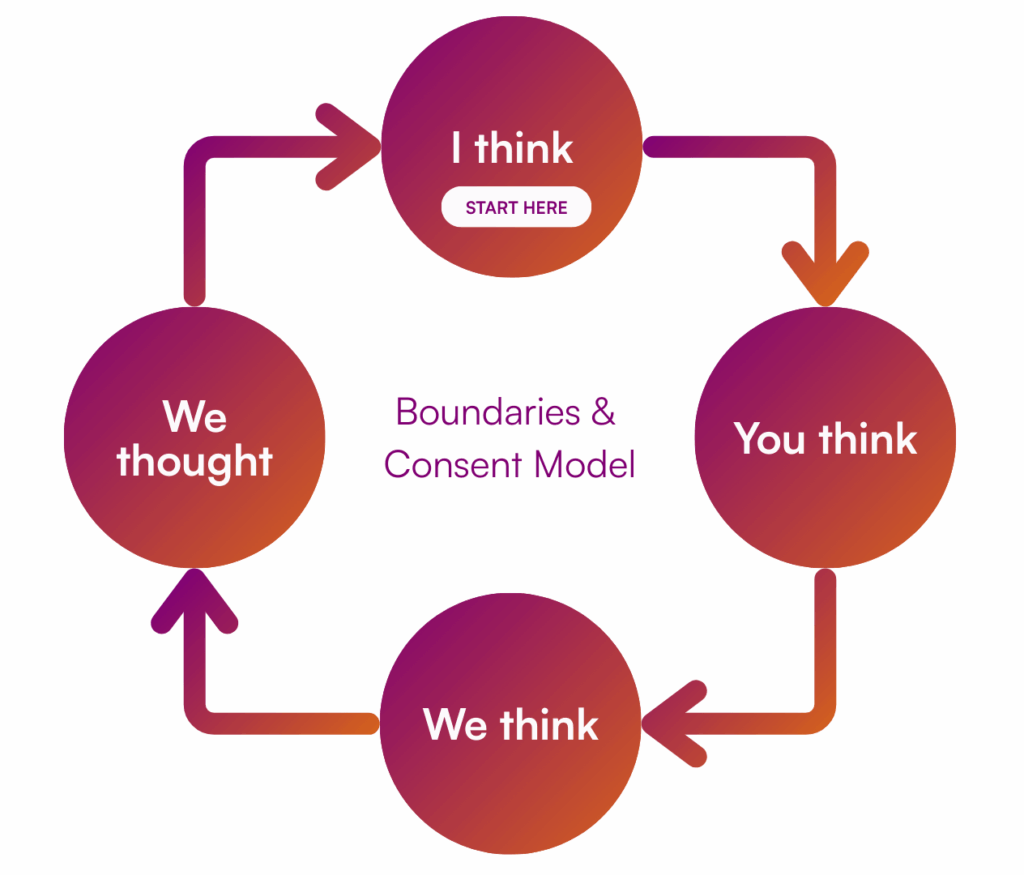
When watching movie/ TV shows, ask your teen whether they think there is consent in different circumstances in the TV show/movie? How do we know?
“What do you think about that scenario?”
“Did that person look comfortable? Why/ Why Not?”
“Do you think that person was consenting? Why/ Why not?”
Or more generally, you could also ask them:
“When do you use consent in day-today life?”
“If someone doesn’t give consent, how do you respond? – Have you experienced this before? What happened?”
“How would you want someone else to respond if you didn’t give consent?”
You meet up with your friend at the mall/ shopping centre. They then want you to leave and go across the road to the skatepark.
You agree to ‘hook up’ with someone. They think this means kissing but you think it means more. What should you do to ensure everyone is safe and comfortable?
The person you want to make out with is asleep upstairs and no one else is in the home – what should you do?
You are meant to be at a sleepover, but you and your friends went to a party instead. At the party you had a few drinks and someone touched you when you didn’t want them to. Is this consensual? Who can you talk to about this?
Support
Even though your teens may not always tell the truth, if harm happens to them, they need to know that it’s not their fault and that they can always come to you. Just because they lie to you, or do something they were not allowed to do, if someone sexually assaults them, it is not their fault and it is important they know they always have someone to go to for support. Remember you don’t need to be the expert, there are external agencies and organisations that offer help and support when needed.